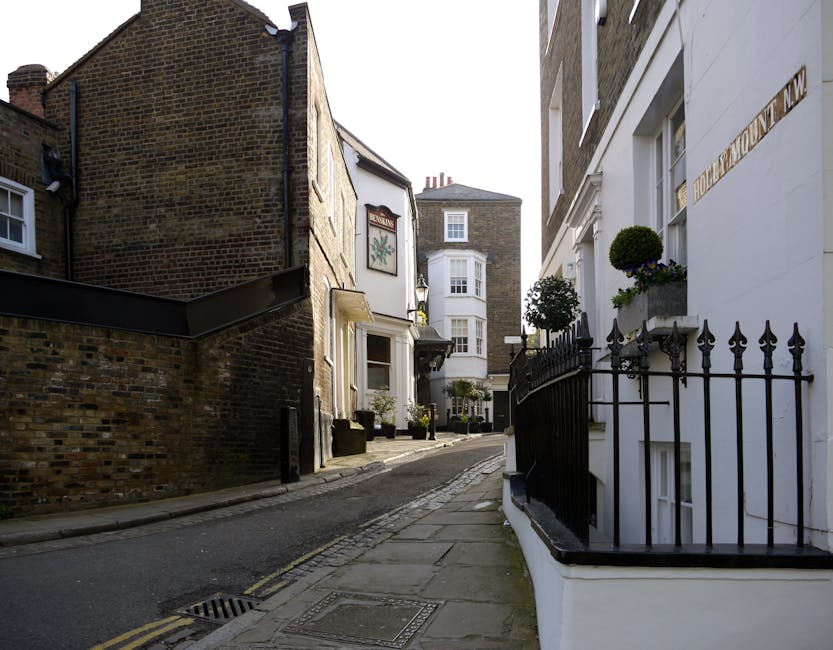
St Margarets Removals Guide for Narrow Streets Twickenham

Moving house is never exactly relaxing, but in St Margarets the narrow streets can make it feel like a proper puzzle. If you are trying to organise a move in Twickenham and wondering how on earth a removal van is supposed to squeeze past parked cars, corners, bikes, bins and the occasional delivery truck, you are in the right place. This St Margarets Removals Guide for Narrow Streets Twickenham walks through the practical side of moving in tighter residential roads, so you can plan with less stress and a lot fewer surprises.
Whether you are moving from a flat, a terraced house, or a converted property tucked down a tight street, the basics are the same: measure well, communicate clearly, protect your belongings, and choose the right vehicle and service level. Sounds simple. In reality, it takes a bit of thought. The good news is that narrow-street removals are very manageable when you understand the local pinch points and plan ahead.
Why St Margarets Removals Guide for Narrow Streets Twickenham Matters
St Margarets has a lot going for it: leafy residential pockets, older homes, varied property layouts, and that familiar southwest London feel where everything is close enough to walk, but not always easy to drive through. Narrow streets change the whole shape of a move. They affect the size of vehicle you can use, where loaders can park, how long the job takes, and how much carrying is needed between the van and the front door.
To be fair, this is where a lot of moves go sideways. A customer assumes a full-size removal lorry can pull up outside, only to discover a sharp bend, parked cars on both sides, and not much room to manoeuvre. Then everyone is improvising at 8 a.m., which is nobody's favourite way to start moving day.
Good planning matters because narrow streets increase the risk of:
- delays caused by access problems
- extra carrying distance from vehicle to property
- damage to furniture, door frames, or parked vehicles
- stress for neighbours if access is blocked
- unexpected costs if a larger vehicle cannot safely reach the address
That is why local knowledge counts. A team that understands Twickenham's residential roads, loading challenges, and mixed housing stock will usually give you a cleaner, calmer move. If you are comparing options, it helps to look at broader removal services as well as more specific support such as man and van or flat removals, because narrow-street moves often need a slightly different approach.
How St Margarets Removals Guide for Narrow Streets Twickenham Works
The moving process in narrow streets is less about brute force and more about smart sequencing. You are not just moving boxes; you are managing access, timing, vehicle choice, and lifting routes. The move becomes smoother when each part has been thought through before the van turns up.
In practical terms, the process usually starts with an access check. This can be done from photos, a video walkthrough, or a quick site visit, depending on the size and complexity of the move. The aim is simple: find out whether a moving truck, a smaller removal van, or a flexible man-with-van style service is best for the street and the property.
Then comes the planning stage. This includes parking, the order of loading, how fragile items will be handled, and whether there are any awkward stairs, tight hallways, or unusually heavy pieces. A piano, for example, is a completely different proposition from a few suitcases and a stack of kitchen boxes. If you have anything especially bulky or delicate, services such as piano removals or specialist furniture removals can be worth considering.
The day itself is usually organised around access windows and efficiency. In narrow roads, a well-run team will often:
- arrive a little early to assess street conditions
- position the vehicle where it blocks least and works safest
- move large items first if that reduces repeated trips
- protect walkways, bannisters and furniture edges
- keep communication open with you and, if needed, nearby residents
This is also where supporting services can make a difference. Packing support can reduce the number of loose items flying around, and secure storage can take pressure off if the move-out and move-in dates do not line up neatly. In a tight street, that kind of breathing room matters more than people realise.
Key Benefits and Practical Advantages
When a narrow-street move is planned properly, you get more than just a successful day. You get fewer headaches before the move, less risk on the day, and a better chance of keeping everything on schedule. That sounds obvious, but the difference is noticeable in real life.
Here are the main benefits of taking a careful, localised approach:
- Better vehicle matching: A smaller van may be the smarter choice than forcing a larger lorry into a street that simply does not suit it.
- Less carrying strain: Thoughtful parking and loading plans reduce unnecessary lifting and the risk of knocks.
- More predictable timing: If access has been checked properly, the move is much less likely to spiral into delays.
- Lower damage risk: Narrow hallways and tight corners need protection, and a careful team will plan for them.
- Better neighbour relations: A tidy, efficient move is less disruptive to the street.
There is also a psychological benefit, if we are honest. Moving is tiring enough without watching a van do a 17-point manoeuvre while you stand on the pavement with a kettle and a growing sense of dread. A move that feels organised gives you confidence. That changes everything.
For people moving from upper floors, conversions, or small apartments, services like house removals or house removalists can be especially useful because the loading and access plan tends to be more detailed. If the job is smaller, a more agile man with a van approach may suit the street better.
Who This Is For and When It Makes Sense
This guide is for anyone moving in or around St Margarets where access is tight, parking is awkward, or the route from van to front door is not straightforward. In other words: a lot of people, really.
It makes the most sense if you are:
- moving from a terraced house on a narrow residential road
- living in a flat with limited street access
- handling a family move where there is bulky furniture
- relocating a small office or home workspace
- trying to move on a tight schedule and cannot afford access problems
- dealing with a same-day handover or short notice completion
It is also relevant if you are a student moving into or out of shared accommodation. Student moves tend to be lighter, but the timing is often awkward and the roads are still the roads. A compact service like student removals can be a sensible fit when you do not need a huge vehicle but still want things handled properly.
If you run a business, the same principles apply. For office desks, screens, boxes and equipment, a narrow street can complicate delivery and collection more than the actual moving itself. In that case, office removals or commercial moves may be the better route, because the planning around access and timing becomes part of the service, not an afterthought.
Step-by-Step Guidance
If you want the short version, here it is: measure, plan, pack well, book the right vehicle, and keep the day simple. Below is the longer version, which is usually worth reading before the boxes start piling up.
1. Check the street properly
Do not rely on a quick glance from the front window. Walk the route from the nearest practical stopping point to your door. Look for parked cars, low branches, narrow turns, tricky kerbs, and any one-way restrictions that might affect unloading. Morning and evening conditions can be different too. A street that looks manageable at 2 p.m. may feel much tighter after the school run.
2. Measure the awkward things
Measure stairwells, landings, doorway widths, and the largest furniture pieces. A wardrobe that fits the room is not automatically a wardrobe that fits the staircase. That little detail catches people out all the time. If in doubt, take photos from several angles and share them with the removals team early.
3. Choose the right service level
Big van, small van, full removals team, packing support, storage support, same-day help - these are not just fancy extras. They solve different problems. A narrow street often rewards flexibility. If your route is especially tight, a smaller vehicle or a split-load approach may be better than one oversized load. Services like removal van hire or removal truck hire should be considered in context, not by size alone.
4. Pack for movement, not just storage
Boxes that are packed too heavy are a nightmare on stairs. Boxes that are packed badly fall apart at the worst possible moment, usually when someone is halfway up a tight hallway. Keep box weights sensible, label them clearly, and use proper wrapping for glass, mirrors and other fragile items. Support from packing and boxes or packing and unpacking services can save a lot of faff here.
5. Confirm parking and timing
Where can the vehicle stop? For how long? What happens if another car takes the space? These are not tiny details; they can shape the whole move. Build in a buffer. A little waiting time is better than rushing every lift through a crowded street.
6. Protect the property
Hallways, bannisters, floors and door frames should be protected before the heavy lifting starts. This is especially important in older properties where plaster, woodwork and tight corners can be unforgiving. Good insurance and safety practices matter here, because even careful teams know that moving in confined spaces carries some risk.
7. Keep essentials separate
Put passports, chargers, medication, tea bags, snacks, keys and one change of clothes in a separate bag. Honestly, this little step feels boring right up until you need a phone charger at 8:40 p.m. and every box looks identical.
Expert Tips for Better Results
After enough moves, a pattern becomes obvious: the people who prepare well feel calm on moving day, and the ones who do not spend the day reacting to problems. It is rarely more complicated than that.
- Book earlier than you think you need to. Narrow streets often limit how many vehicles can work comfortably at the same time.
- Tell the removals team about every awkward item. That includes mirrors, exercise equipment, pianos, bikes, garden furniture, and anything with a weird shape.
- Use colour-coded labels. It sounds basic, but when two bedrooms and a kitchen are all arriving at once, simple labels save time.
- Keep the entrance clear. A narrow hallway becomes a bottleneck very fast if bags, pets, or loose items are left there.
- Plan for weather. Rain changes everything in London. Slippery steps and damp cardboard are not a great combination.
- Ask about flexibility. Sometimes a smaller split move or a short storage stop makes the day much smoother.
One practical detail that gets overlooked: if your front door opens straight onto the pavement, the unloading rhythm matters more. You want boxes to move in a steady line, not in bursts. That kind of flow looks boring, maybe, but it works. And boring is underrated on moving day.
Common Mistakes to Avoid
Narrow-street removals are forgiving in some ways and unforgiving in others. The biggest mistakes are usually easy to spot in hindsight. In the moment, though, they can feel like bad luck. They are often just planning gaps.
- Assuming a large vehicle will fit. Streets in St Margarets vary a lot, and not every route suits the same van.
- Leaving parking to the day itself. If the vehicle cannot stop near the property, everything gets slower and harder.
- Overpacking boxes. Heavy boxes are slower to carry and more likely to fail on stairs or around corners.
- Forgetting to mention access issues. That includes steps, basement entries, steep drives, and restricted turning space.
- Not checking furniture dimensions against the route. A sofa that clears the lounge may still get stuck in a hallway. Awkward, but common.
- Ignoring time pressure. If keys are being handed over at a fixed time, factor that into your loading plan from the start.
There is also a softer mistake: trying to do too much yourself. You do not need to prove anything on moving day. If a professional team can reduce the number of trips, the lifting, or the stress, that is usually money well spent.
Tools, Resources and Recommendations
You do not need a warehouse full of kit to make a narrow-street move work. A few sensible tools and support options go a long way.
| Need | Useful option | Why it helps in narrow streets |
|---|---|---|
| Smaller access routes | man with a van | Easier to position where roads are tight or parking is limited |
| Full-house moving support | house removals | Useful when there is more furniture, more boxes, and more coordination needed |
| Short-term holding space | storage | Takes pressure off if move-out and move-in dates do not line up neatly |
| Late changes or urgent timing | same-day removals | Can help when plans shift suddenly and access windows are tight |
| Trust and reassurance | about us | Helps you understand the company's approach and working style before booking |
Recommended basics for your own side of the move:
- strong tape and sturdy boxes
- marker pens for room labels
- furniture covers or blankets
- old towels for damp or muddy weather
- door protection or corner guards if needed
- a simple item list for important belongings
If you are comparing companies, the best place to start is usually removal companies alongside pricing and quotes. That keeps your decision grounded in what the move actually requires, not just what sounds cheapest at first glance.
Law, Compliance, Standards, or Best Practice
Moving homes in the UK is not usually a highly regulated event for the customer in the way some other services are, but there are still sensible standards and duties worth taking seriously. Safe lifting, careful loading, transparent pricing, and clear insurance arrangements are all part of professional best practice.
In narrow streets, compliance and best practice tend to overlap with common sense. For example:
- Vehicles should be parked and loaded without creating avoidable danger to pedestrians or other road users.
- Teams should take reasonable steps to prevent damage to property during carrying and loading.
- Customers should be given clear information about what is included, what may cost extra, and what the limitations are.
- Where a move involves shared access, steps, or public space, communication matters more than people think.
It is also worth checking the company's stated approach to health and safety policy and terms and conditions. Not because you want a pile of paperwork on the kitchen table, but because clear policies usually mean fewer misunderstandings later.
For business customers, data, equipment handling, and building access may add another layer of care. Office moves and commercial relocations should be planned with the same attention to access as a home move, maybe more. The street still does not care whether you are moving a sofa or a server rack.
Options, Methods, or Comparison Table
Not every narrow-street move needs the same setup. Some are simple, some need extra coordination, and some work best as a hybrid. Here is a quick comparison to help you decide.
| Method | Best for | Pros | Watch-outs |
|---|---|---|---|
| Man and van | Smaller moves, flats, lighter loads | Flexible, easier in tight streets, usually efficient | May need more trips if the load is larger than expected |
| Full removals team | Family homes, bulky furniture, more rooms | More support, better for heavier or awkward items | Needs better access planning and can be overkill for tiny moves |
| Storage-based move | Delayed handovers, renovations, gap between dates | Reduces time pressure, keeps belongings safe | Requires an extra transfer step |
| Same-day removal support | Urgent situations, changes in schedule | Fast response, useful when plans shift suddenly | Less room for detailed pre-planning, so communication matters even more |
For most narrow roads in St Margarets, a compact, well-organised solution beats a larger, less flexible one. That is the honest answer. Bigger is not always better. Sometimes it just means more shuffling, more waiting, and more apologies to the neighbour whose driveway has been temporarily blocked.
Case Study or Real-World Example
A practical example helps here. Imagine a couple moving from a first-floor flat in St Margarets to a house a few streets away. The road outside the flat is narrow, with cars parked along one side and only a small space near the building entrance. They have a sofa, a dining table, six boxes of books, a bike, and several fragile kitchen items.
At first they think a large van will be fine. But after checking the street layout, it becomes clear that a smaller vehicle would make loading easier and reduce the chance of blocking the road. They also decide to use packing support for the fragile items and to move non-essentials into storage for a week because the new property is not quite ready. A calm decision, not a dramatic one.
The result? Fewer trips around the block, less pressure on the stairwell, and a move that feels organised rather than frantic. The couple still had the usual moving-day chaos - because let's face it, there is always a box you cannot find at 4 p.m. - but the access side of the move stayed under control.
That is the real value of planning for narrow streets. It does not make moving magical. It just makes it manageable.
Practical Checklist
Use this checklist before moving day. It is simple, but it catches a lot of avoidable problems.
- Confirm the full address and any access notes.
- Measure the largest furniture items.
- Check whether a smaller van would be better than a larger vehicle.
- Identify where the vehicle can safely stop.
- Tell the removals team about stairs, tight corners, or awkward entries.
- Label boxes by room and priority.
- Pack fragile items separately and clearly.
- Keep essentials in one bag for the first night.
- Arrange storage if move-in and move-out dates do not match.
- Review insurance, safety, and terms before the day.
- Leave a clear path from the front door to the loading point.
- Warn neighbours if parking or access may be briefly affected.
Expert summary: In narrow St Margarets streets, the safest move is usually the simplest one: the right vehicle, clear access notes, properly packed boxes, and a team that knows how to work around real-world constraints instead of pretending they do not exist.
Conclusion
Narrow streets do not have to turn moving day into a headache. With the right preparation, the right vehicle, and a sensible plan for access, a St Margarets move can be calm, efficient and surprisingly straightforward. The big lesson is this: do not treat access as a small detail. In Twickenham, it often is the detail.
Think through the route, choose the right service level, and give yourself a bit of margin for the unexpected. That one small shift in planning can save a lot of stress later on. And if there is anything you take away from this guide, let it be that a well-organised move always feels lighter than a rushed one. Every time.
Get a free quote today and see how much you can save.
For more background on the team behind the service, you can also review the company's about us page, or if you are ready to talk through your move, head to the contact us page. Either way, a little planning now can make the whole day feel much better.
Frequently Asked Questions
What makes removals in St Margarets different from other parts of Twickenham?
The main difference is access. Many streets are narrow, parking can be limited, and some properties sit behind tighter frontages or awkward turns. That changes the type of vehicle and the amount of carrying involved.
Is a small van better than a large removal truck for narrow streets?
Often, yes. A smaller vehicle can be easier to position and may reduce disruption on the road. That said, the right choice depends on the volume of items and whether the route can safely handle a larger vehicle.
How far in advance should I book a move in St Margarets?
As early as you can, especially if your move involves limited parking, upper-floor flats, or a fixed handover time. Tight streets leave less room for last-minute improvisation, and nobody wants that kind of pressure.
Can a removals team help if my street is too narrow for a big lorry?
Yes. In many cases, a smaller van, split loads, or an alternative loading point can solve the issue. This is exactly why access information should be shared before the move.
Do I need packing help for a narrow-street move?
Not always, but it can help if you have fragile items, a large number of boxes, or not much time. Well-packed items move faster and more safely through tight hallways and stairs.
What should I do if parking outside my property is difficult?
Tell the removals company early and think through the nearest sensible stopping point. Even a short carry is manageable when it is planned properly. The trouble starts when everyone assumes parking will sort itself out.
Are storage services useful for narrow-street removals?
Yes, especially when move-out and move-in dates do not align or when you want to reduce pressure on the day. Storage can turn a tight timetable into something much more workable.
How do I protect my furniture in a tight hallway or staircase?
Use proper wrapping, covers, and clear lifting routes. Good handling matters more than force. If a sofa looks awkward on the stairs, it probably is awkward on the stairs.
What if I only have a small flat move?
A flexible service such as man and van or flat removals may suit you well. Smaller moves in narrow streets often benefit from the ability to load quickly and avoid blocking the road for long periods.
Can I organise a same-day move if plans change suddenly?
Sometimes, yes. Same-day support can be useful when timing shifts unexpectedly, though you will still want to share access details clearly. Urgency is fine; mystery is not.
What should I ask a removals company before booking?
Ask what size vehicle they recommend, how they handle narrow access, whether they offer packing or storage, and what their insurance and safety arrangements are. Clear answers now are better than surprises later.
Is it worth using a professional removals company for a short local move?
Usually yes, if access is tricky or you have bulky items. Short distance does not always mean simple move. In some cases, local moves are actually the most fiddly because the roads are so tight and everyone expects them to be easy.